You secure the job site. You vet your subcontractors. You lock up the heavy machinery. But what happens when a hacker locks down your estimating software in the middle of bidding season?
Standard general liability, property, and crime policies explicitly exclude digital risks. This leaves a massive coverage gap. Cyber liability fills it. The policy covers ransomware, wire fraud, and data breaches. Traditional policies secure your physical job site; cyber policies secure your digital backend. You need both to build a comprehensive risk strategy.
Standard policies ignore a growing financial threat to Arizona contractors. The industry shift to digital blueprints, cloud management, and electronic payments is rapid. Consequently, your operational risk profile has completely changed.
Here is exactly how cyber liability fills the critical gaps in your existing commercial insurance stack.

The Modern Contractor Insurance Stack
To understand how these policies complement each other, you need a clear mental model of the modern contractor insurance stack. Think of it as a grid. If a risk doesn’t fall into the correct box, it isn’t covered.
- General Liability (GL) → Job Site Risk: Pays for bodily injury and physical property damage.
- Workers’ Comp → Employee Injury: Handles physical harm occurring on the job site.
- Property Insurance → Equipment & Buildings: Replaces physically stolen or damaged hardware, tools, and facilities.
- Cyber Liability → Digital Risk: Secures intangible digital assets. It pays for forensic IT investigations, legal compliance after a data breach, and network-based extortion events.
Why is the Construction Industry Suddenly a Primary Target?
For decades, hackers ignored the trades to focus on healthcare and retail. That has changed. Cybercriminals are opportunistic, and modern construction firms possess decentralized networks, rely on high-dollar wire transfers, and operate within a massive web of third-party vendors.
Every time a project manager logs into Buildertrend from an unsecured job site Wi-Fi network, it creates a potential backdoor.
These risks exist outside the scope of traditional contractor insurance policies, which is where cyber liability becomes essential.
The Minimum Digital Exposure Threshold for Contractors
Many contractors assume they are too small to be targeted. But if your business does any of the following, you have already crossed the threshold of digital exposure:
- Taking devices (laptops, tablets) onto unsecured job site Wi-Fi networks.
- Accepting and processing electronic credit card payments.
- Storing client information, project bids, or financial data digitally.
- Performing contract work for larger commercial developers or municipalities.
If you meet this threshold, your standard contractor insurance is actively leaving you exposed.
Does General Liability Cover Data Breaches?
No. Standard commercial general liability (CGL) policies explicitly exclude the loss of digital data and electronic assets.
Insurance carriers do not consider “bits and bytes” to be tangible property. If a ladder falls and breaks a client’s window, your GL policy responds. If a hacker breaches your server and steals your clients’ financial data, a standard general liability policy will not cover the legal fees, the forensic investigation, or the notification costs.
This is the exact gap cyber liability is designed to fill.
The Hard Costs of a Cyber Attack
According to the Hiscox Cyber Readiness Report, 41% of US small businesses experienced at least one cyber-attack in the past year. While the median cost of a baseline attack sits around $8,300, the financial toll for commercial contractors dealing with extortion or compromised client data is exponentially higher.
In fact, IBM’s Cost of a Data Breach Report notes that for businesses with fewer than 500 employees, the average cost of a full-scale data breach has soared to $3.31 million.
These costs fall entirely outside standard contractor insurance policies unless cyber liability is in place.
| Cyber Incident Type | Average Financial Impact |
| Business Email Compromise (BEC) | $130,000 |
| Ransomware Recovery | $75,000 |
| Stolen Device Forensics & Notification | $50,000 |
| Regulatory Fines | $25,000 |
Real-World Scenarios: When Cyber Meets Construction
Let’s look at the actual attack vectors hitting the Arizona market and how bundled insurance responds.
1. The $50,000 Typo: Business Email Compromise (BEC)
First, attackers breach a vendor’s email account. They sit back and watch the invoice flow. Then, just before a large lumber order or subcontractor payment goes out, they strike. They intercept the communication chain.
The attacker subtly alters the sender’s email address. Next, they send a message: “We recently updated our banking details. Please wire the progress payment to this new routing number.”
The contractor wires the money straight to an offshore account. Standard crime policies often deny these claims because the contractor willingly sent the funds. This is a scenario where general liability and standard crime policies offer no protection—but cyber liability does.
You need a cyber policy with specific “Social Engineering Fraud” endorsements to recover those stolen funds.
2. Digital Extortion and Ransomware
Ransomware is currently crippling the skilled trades. A malicious program encrypts your files and demands payment for the decryption key. Your commercial property insurance might cover your physical server if it catches fire, but it won’t pay the ransom to unlock the data inside it.
Cyber liability complements your property coverage by funding the digital recovery, covering the cost of specialized IT negotiators, the ransom demand, and replacing your lost revenue while your operations are offline.
3. Stolen Hardware vs. Stolen Data
A superintendent leaves a tablet in their truck. Someone smashes the window and steals it. Your commercial property policy pays the $800 to replace the physical device.
Cyber liability complements this by paying the $50,000 forensic IT investigation and state-mandated notifications required because that tablet contained unencrypted bids and client banking details.
What Cyber Liability Adds to Your Existing Contractor Insurance
A robust cyber policy is split into two distinct categories to protect both your balance sheet and your reputation, picking up exactly where your physical policies stop.
First-Party Expenses (Your direct costs):
- Forensic Investigation: Costs to hire IT experts to determine the exact data compromised.
- Notification Costs: Covers the expense of notifying affected parties. This is a strict requirement under Arizona law (ARS § 18-552).
- Business Interruption: Coverage for lost income while your systems are down.
- The Breach Coach: Access to immediate, specialized legal counsel within the first critical 48 hours to guide your response under attorney-client privilege.
Third-Party Liabilities (If you get sued):
- Legal Defense: Coverage for attorney fees if a client sues you over a data breach.
- Regulatory Fines: Coverage for fines levied by government bodies for non-compliance with data protection laws.
Why Brokers Must Structure Both Policies Together
Cyber insurance is not standardized. The language in a cyber policy varies wildly from carrier to carrier. Furthermore, failing to align your cyber policy with your general liability and property policies can result in overlapping coverages or dangerous exclusions.
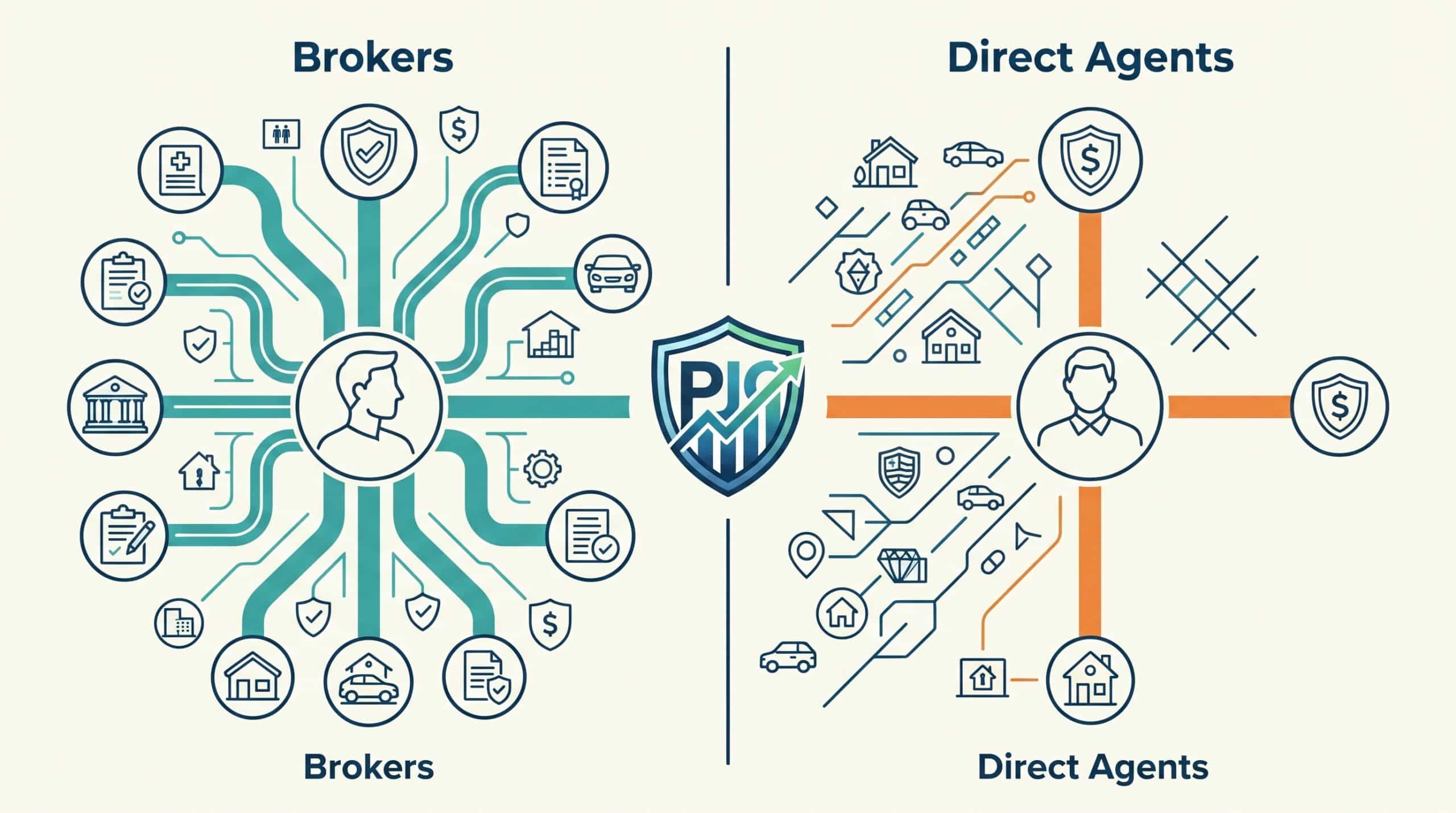
As an independent brokerage, we don’t just sell cyber policies—we integrate them with your existing contractor insurance.
We audit your physical risks and your current tech stack. From there, we build a custom, integrated policy. This guarantees your cyber and general liability policies complement each other perfectly. You avoid paying for redundant coverage.
Real Experiences from Local Builders
Transitioning your insurance to a comprehensive, broker-managed stack shouldn’t slow down your operations. We act as an extension of your team, securing hard-to-place coverages and turning around Certificates of Insurance (COIs) so you can get on the job site faster.
“I have been with PJO for about 15 years… I am a small custom builder, NOT an insurance expert. Working with Patrick was like hiring an in-house insurance specialist to deal with these details as if he were on my staff. Patrick watches my back and guides/advises me through any paperwork or audits.” — Kevin Cogley [Read full review]
“Patrick at PJO Insurance has been more than helpful and has helped me tremendously with my business! He is knowledgeable in all aspects of construction from General Liability to Workman’s Comp questions.” — Karen Campbell [Read full review]
Secure Your Complete Insurance Stack Today
Without cyber liability, your contractor insurance leaves critical digital exposures completely unprotected. Together, these policies form a complete risk management system.
Moving to digital tools should not expose your assets. Contact PJO Insurance Brokerage for a thorough gap analysis of your commercial policies. We review your general liability limits and analyze your tech stack. This identifies specific vulnerabilities so we can build a targeted, complementary risk management plan.

PJO INSURANCE BROKERAGE
Email: patrick@pjobrokerage.com
Website: www.pjobrokerage.com
Arizona Location
4103 East Prickly Pear Trail
Phoenix, Arizona 85050
Office: 480-680-9951
California Location
107 Via Estrada, Unit A
Laguna Woods, California 92637
Office: 949-264-0889
Nevada Location
9850 S Maryland Parkway Suite A-5-262
Las Vegas, Nevada 89183
Office: 702-747-5403